
DataStealth’s automatically discovers every data source – structured and unstructured – including forgotten dev copies and shadow IT. Then it scans 100% of the data with advanced validation to deliver a trustworthy inventory with near-zero false positives.

A defensible security program starts with a complete data inventory. Yet most discovery tools were built for yesterday’s estates – not today’s sprawl of databases, file shares, SaaS, and shadow IT. The result: blind spots, wasted effort, and regulatory exposure.

The production database isn’t your biggest risk. It’s the forgotten dev copy or the shadow IT share no one tracks. Tools that need predefined targets will always miss what matters most.
For GDPR, PCI DSS 4.0, and CCPA, “mostly” isn’t good enough. Sampling can’t deliver the cell-by-cell accuracy needed for compliance or “right to be forgotten” requests.


Regex-only scanners bury teams in noise. Chasing false positives wastes hours and creates alert fatigue – the perfect recipe for missing the real threat.
DataStealth’s discovery engine was built for scale, precision, and modern hybrid estates. It finds and classifies sensitive data everywhere – structured and unstructured – with accuracy you can defend to regulators and the board.
Point our agentless scanner at a segment, and it auto-discovers every database, file share, and SaaS connection – even shadow IT your CMDB missed.

Beyond regex: contextual analysis, validation (e.g., Luhn checks, Soundex), and tunable confidence scoring classify with surgical precision.

No sampling. Proven to scan 12B+ rows and 78K tables in production databases, plus unstructured stores, delivering a full inventory for governance and remediation.

A telco needed a complete inventory of sensitive data across massive databases – including 12B rows, 78K tables – plus sprawling file shares.
DataStealth scanned both structured and unstructured sources at full scale, accurately identifying PII and mapping concentration with cardinality analysis.

The company gained a defensible, board-ready inventory and prioritized protection based on real-world risk instead of guesswork.
By scanning 100% of flows and stores, DataStealth builds a trusted, actionable inventory of PII, PHI, and PCI across your estate. At the same time, sensitive values can be tokenized at the source, ensuring that at-rest data is neutralized and useless to attackers.
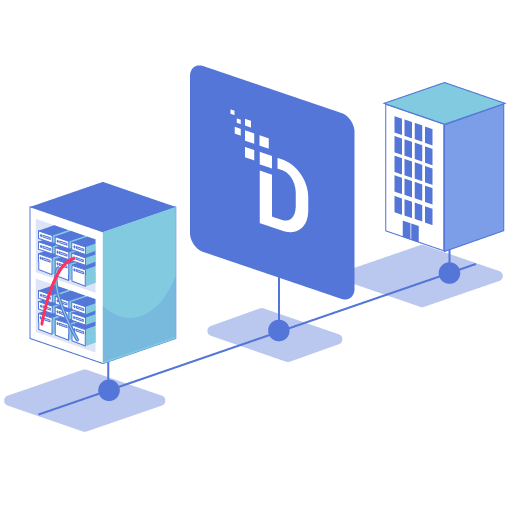
Sitting inline at the network layer, DataStealth inspects traffic across HTTP, SFTP, JDBC, ODBC, and more. It automatically discovers structured and unstructured data sources – including shadow IT and forgotten dev copies – without agents or code changes.

Our engine applies contextual analysis and advanced validation (e.g., Luhn checks for PANs, Soundex for names, regex + heuristics) to classify data in real time with near-zero false positives. Every sensitive element is tagged with type, confidence, and location for complete accuracy.

Sensitive data discovery answers one question – where does your data live? It scans your environment to find every database, file share, SaaS application, and shadow IT endpoint, including sources your CMDB doesn't know about.
Classification answers the follow-up – what kind of data is it, and how sensitive is it? It labels every element by type (PII, PHI, PCI, financial, government) and assigns a confidence score so your team knows exactly what to prioritize.
You need both because discovery without classification gives you a list of data sources with no context – and classification without discovery only covers the systems you already know about.
DataStealth runs both as a unified workflow from a single agentless platform, closing the gap that leaves most enterprises exposed. For the strategic rationale, read The Imperative of Data Discovery and Classification in the Enterprise.
Regulations like GDPR, PCI DSS 4.0, and HIPAA don't accept "most of your data is accounted for." GDPR's right to erasure requires you to locate every instance of an individual's personal data – across every system. PCI DSS Requirement 12.5.2 mandates a complete inventory of all systems in the cardholder data environment.
Sampling-based tools check a subset of rows or files and extrapolate – missing edge cases, outlier records, and dark data hiding in rarely accessed stores. One missing table containing unencrypted PANs results in a failed audit.
DataStealth replaces sampling with 100% scanning – proven in production with 12B+ rows and 78K tables. Every row, every file, every field is inspected and classified.
The result is a defensible inventory that satisfies DSAR obligations, audit requirements, and board-level reporting.
Regex-only scanners flag anything that matches a digit pattern – i.e., order IDs, internal reference numbers, and timestamps all get misclassified as credit card numbers or SSNs. The result is alert fatigue and wasted remediation cycles.
DataStealth eliminates this through a multi-layered validation pipeline. Pattern matching is just the first filter – it's followed by algorithmic validation (Luhn checks for PANs, format validators for national IDs), contextual analysis (cross-referencing column names, neighbouring fields, and schema metadata), and Soundex heuristics for name matching.
Every finding carries a confidence and validity score. Your team sets the threshold – e.g., only surface findings above 95% confidence – so classification results are actionable from day one. False positives that do surface feed back into the system through operator feedback loops, suppressing repeat flags in future scans.
Shadow IT refers to databases, file shares, applications, and cloud services deployed outside of IT-sanctioned channels – i.e., a developer spins up a test database with production data, a team adopts a SaaS tool without security review, or a department maintains a spreadsheet of customer records on a shared drive.
These shadow systems don't appear in your CMDB, aren't covered by your DLP or DSPM tools, and sit outside your compliance perimeter. They represent one of the fastest-growing breach vectors – and one that most data discovery tools miss entirely because they require you to point them at known targets.
DataStealth's agentless scanner takes a different approach. Point it at a network segment and it auto-discovers every data source on that segment – known and unknown, sanctioned and unsanctioned. Combined with data protection capabilities like tokenization and masking, shadow data can be remediated immediately after discovery rather than sitting exposed while your team builds a remediation plan.