
Provision high-fidelity, production-scale test data without ever exposing a single record of real PII.

See how to deliver safe, accurate test data at enterprise scale without code rewrites, duplication, or compliance risk.
Developers need real-world data to test effectively. But the choice is always the same: use real PII and risk compliance – or use fake data and risk production failures.

Blocked from production data, devs test with incomplete samples: bugs slip through, apps fail at scale.

Copying PII into non-prod creates toxic environments: massive compliance gaps, prime targets for attackers.

Manual data prep slows releases. Sanitization is error-prone, costly, and stalls your CI/CD pipeline.
DataStealth delivers safe, realistic, instantly available test data, enabling faster development with zero exposure of sensitive data.

Build test databases in one motion: read from prod, write only de-identified data. Real PII never leaves production.
Tokenization preserves IDs, keys, and relationships so joins and logic work flawlessly.


Automate test data creation inside pipelines. Embed TDM directly into CI/CD and ship faster.

Mirror production schemas, tables, and columns automatically into target test environments.
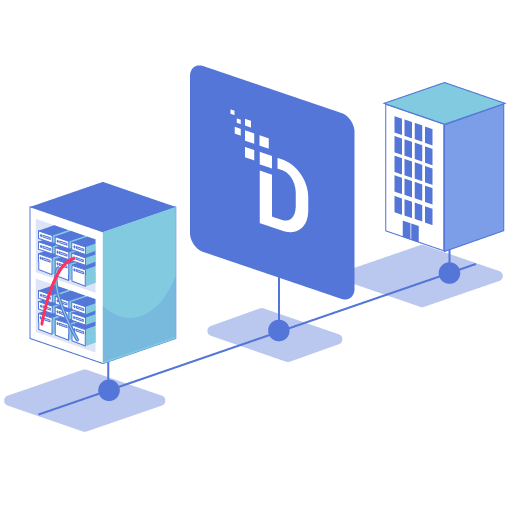
Read from prod, apply tokenization + masking in-flight, and write only safe data downstream.
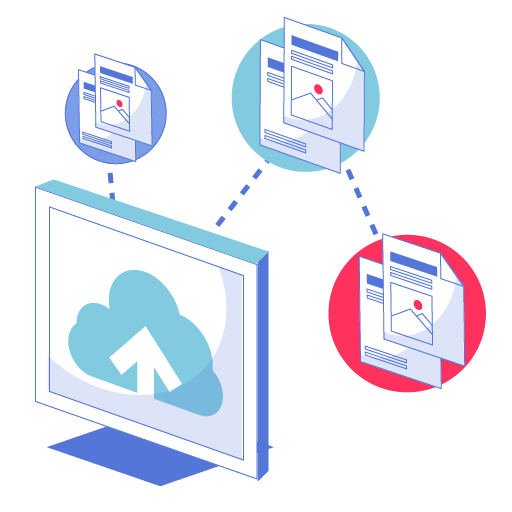
Maintain referential integrity across tables and keys, ensuring applications behave as if they’re in prod.
Non-production systems are less secure than production, yet they’re often filled with live PII. DataStealth eliminates that risk by anonymizing production data into meaningful, substituted values that maintain full usability for testing.
Eliminate toxic data exposure in dev, QA, and UAT.
Maintain compliance with PCI, HIPAA, and privacy regulations.
Reduce breach risk while keeping testing realistic.
Our tokenization and masking preserve structure, relationships, and statistical trends of the original data. Applications behave as if they’re running on real production data, but without compliance risk.

Preserve distributions for valid QA, UAT, and performance tests.
Test data management (TDM) is the practice of provisioning realistic, usable data for development, QA, and UAT environments. The security concern is straightforward – non-production systems are typically less hardened than production, yet they often contain exact copies of production data, including live PII, PHI, and PCI records.
This creates what the industry calls "toxic test environments" – i.e., systems full of regulated data that lack the access controls, monitoring, and encryption of production. A breach of a dev or QA environment containing real customer data carries the same regulatory penalties as a production breach.
DataStealth eliminates this risk by de-identifying production data in-flight – before it ever lands in non-production. For common pitfalls to avoid, read Test Data Management Problems and Mistakes.
DataStealth reads directly from production, applies tokenization and masking in-flight, and writes only de-identified values to the target test environment. Real PII never leaves production – the non-prod system receives format-preserving tokens or masked values that look and behave like real data.
The key differentiator is referential integrity. Because DataStealth uses deterministic tokenization, the same customer ID produces the same token across every table, database, and data type – so joins, foreign keys, and business logic continue to work exactly as they would in production.
This single-pass approach eliminates the need to clone entire production databases, build custom sanitization scripts, or maintain separate data-generation pipelines. One workflow reads from prod, de-identifies in-flight, and writes safe data downstream – automatically and at scale.
Tokenized test data is derived from real production records – each value is replaced with a format-preserving substitute that retains the structure, length, and statistical properties of the original. Because it's derived from real data, it preserves production-realistic distributions, edge cases, and relationship patterns – meaning tests behave as they would in production.
Synthetic test data is fabricated from scratch, generated algorithmically to match a predefined schema and distribution model. It's useful when production data isn't available or when you need to simulate scenarios that don't yet exist in production – e.g., stress testing with 10x the current customer volume.
DataStealth supports both approaches. For most compliance-driven TDM – i.e., ensuring non-prod systems don't contain real PII – tokenized production data is the faster and more accurate path. For performance testing and edge-case simulation, synthetic datasets provide the flexibility to model any scenario.
PCI DSS Requirement 6.5.6 mandates that production cardholder data is not used in test environments unless the environment is PCI-compliant. HIPAA requires covered entities to implement safeguards for all ePHI – including non-production copies.
Most enterprises violate both requirements without realizing it – dev teams pull production data into test environments for debugging, QA teams receive full database exports for regression testing, and analytics sandboxes run on live customer records.
DataStealth enforces compliance by ensuring that real sensitive data never reaches non-production. Production data is tokenized or masked in-flight before it lands in dev, QA, or UAT – and the resulting test data maintains full usability without containing any regulated values. For financial services organizations, read Five Things to Know About Test Data When Developing Financial Software.

Get expert answers on deploying DataStealth at enterprise scale, without performance trade-offs or rewrites.
Schedule My Session