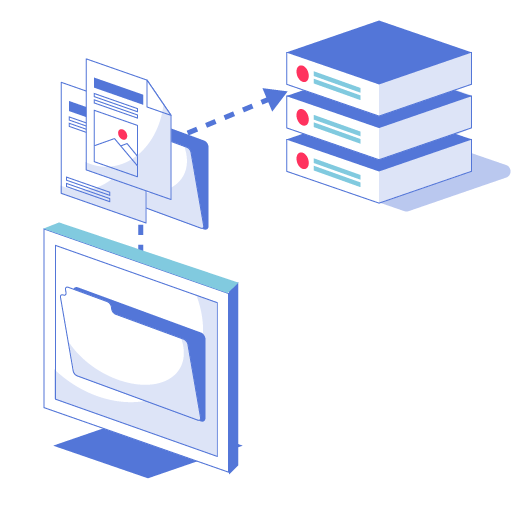
Enforce least-privilege access in any application with attribute-based, in-flight masking – no code changes, no agents, no disruption.

Walls stop outsiders. Over-privileged insiders and third parties still see too much. Broad access to sensitive fields creates avoidable exposure and compliance headaches.

Static roles expose entire records when users only need specific fields.
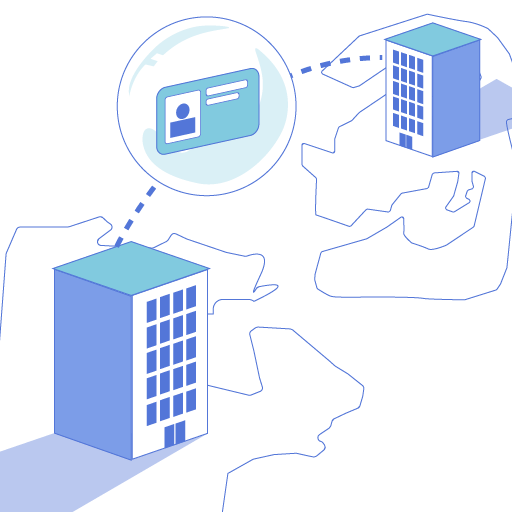
Offshore support, contractors, and even admins retain standing access to PII.

Custom logic per app is slow, fragile, and impossible to keep consistent across your estate.
DataStealth Dynamic Data Masking enforces least privilege in real time. Users see exactly what they need – and nothing more.

Go beyond roles: evaluate user, device, location, time, risk from your IdP (e.g., Entra ID) to decide field/row-level visibility on each request.
We never alter source data. Masks apply in-flight (redact, partial reveal, generalize) at the moment of access – Zero Trust at the data layer.
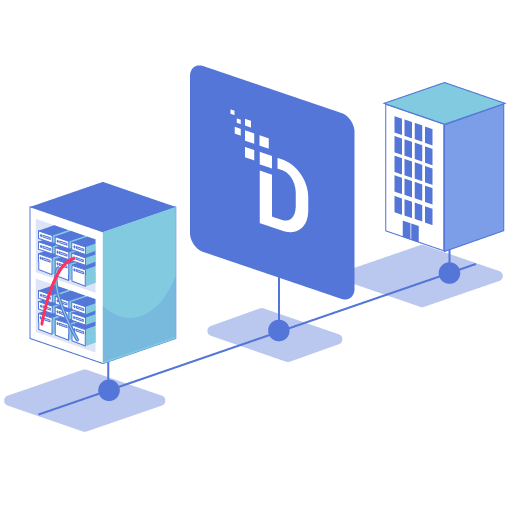

Agentless, network-layer insertion transparently inspects outbound responses – no code, no plug-ins.

On each request, we query your IdP and context (role, group, geo, device posture, time, risk) to compute precise entitlements.

Policy determines the view: **redact a column, mask a row, partial reveal (e.g., **1234), or full access. Source data remains unchanged.

Dynamic data masking applies obfuscation in real time – i.e., at the moment a user or application requests data. The source data is never modified; masks are applied in-flight based on the requester's identity, role, and context. When the same record is requested by a different user with higher privileges, they see the unmasked original.
Static masking is a separate discipline – it permanently replaces sensitive values in a copy of the dataset, typically for test, QA, or analytics environments. Once statically masked, the original values cannot be recovered from that copy.
The distinction matters because dynamic masking protects production workloads without altering data, while static masking protects non-production environments by creating safe replicas. DataStealth supports both from a single platform – applying dynamic masks for operational access control and static masks for test data management.
Traditional role-based access control (RBAC) assigns permissions based on a user's role – e.g., "Support Agent" gets access to customer records. The problem is that roles are coarse-grained. A support agent in Canada handling a billing enquiry doesn't need to see the same fields as a support agent in the US handling a fraud investigation – but under RBAC, they both get identical access.
Attribute-based access control (ABAC) evaluates multiple attributes on every request – i.e., the user's role, department, geographic location, device posture, time of day, and risk score from your IdP. DataStealth uses these attributes to compute field-level and row-level masking decisions in real time.
The result is least-privilege access at the data layer. Each user sees only the specific fields and rows their attributes entitle them to – nothing more. This eliminates the standing over-privilege that RBAC creates, which is a leading cause of insider data exposure.
PCI DSS Requirement 7 mandates that access to cardholder data be restricted to individuals whose jobs require it. HIPAA's Minimum Necessary Rule requires that covered entities limit PHI disclosure to the minimum needed for a given purpose.
Dynamic data masking enforces both requirements at the data layer – without modifying applications. A customer support agent sees the last four digits of a credit card number; a billing analyst sees the full PAN. A nurse sees a patient's current medication list; a billing clerk sees diagnosis codes but not clinical notes.
Because masks are applied based on ABAC policies rather than hardcoded application logic, adding a new role or adjusting access for a specific region takes minutes – not a development sprint. This is particularly valuable for financial services, healthcare, and insurance organizations where role structures change frequently.
DataStealth sits inline at the protocol layer – between applications and data sources. When a user or application requests data, the request passes through DataStealth, which queries your IdP (e.g., Entra ID, Okta) to evaluate the requester's attributes.
Based on the masking policy, DataStealth modifies the response in-flight – redacting, partially revealing, or generalizing sensitive fields before the data reaches the application. The application never knows the data was masked; it receives what appears to be a normal response in the correct data format.
This agentless architecture means there are no SDKs to embed, no application-side logic to maintain, and no per-app configuration to manage. One policy applies consistently across SaaS applications, on-premise databases, cloud workloads, and hybrid environments – from a single console.

Get expert answers on how to deploy DataStealth at enterprise scale in your environment without performance trade-offs, code rewrites, or disruption.
SCHEDULE A CALL