
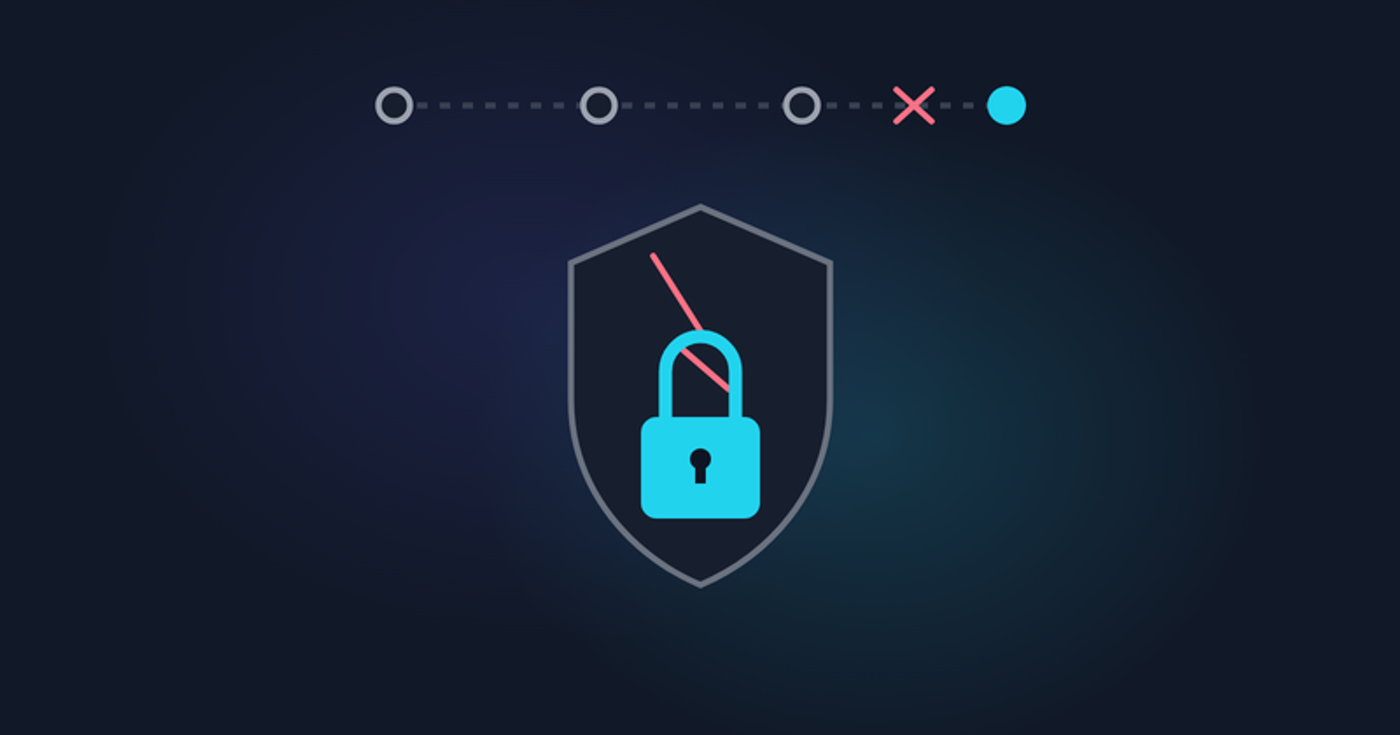
Most enterprise security programs are built around a sequence of controls: prevent the attack, detect the compromise, contain the spread, recover the environment.
That architecture reflects sound thinking.
But it also contains a gap that becomes visible the moment an attacker reaches a production database, a privileged insider exports a file share, or ransomware lands on a server that holds customer records.
The real question security professionals are asking is, if someone reaches our data, what happens to it?
The Four Layers of Enterprise Security - and Where Each One Stops
Enterprise security programs are built in depth, and that depth is valuable. But each layer has a defined scope, and understanding where each one ends is as important as understanding what it does.
Layer 1: Prevent Attacks
Firewalls, secure web gateways, email security, identity providers, and endpoint protection are designed to stop attackers before they gain a foothold.
Prevention is the first and most important line of defense, and the industry has made significant advances in this area.
But no prevention stack is perfect. Zero-day vulnerabilities are discovered. Credentials are phished or purchased on dark markets. Cloud resources are misconfigured. Trusted third-party vendors become attack vectors. Eventually, in a sufficiently large and complex environment, something gets through.
The assumption that prevention will always hold is the single most common gap in enterprise security posture. Mature programs treat breach as a planning assumption, not a failure condition.
Layer 2: Detect Compromise
Once an attacker is inside, SIEM platforms, XDR solutions, and SOC teams work to recognize suspicious activity. Detection capability has improved dramatically. Mean time to detect has shortened. Behavioral analytics has made lateral movement harder to hide.
But detection has a structural limitation that no amount of tooling resolves: detection does not stop data from being viewed or copied. An attacker identified within minutes can exfiltrate a database in seconds. The detection clock and the data exposure clock are not synchronized.
Layer 3: Contain Damage
Security teams isolate endpoints, disable accounts, block network segments, and shut down applications to limit the spread of an attack. Containment is essential and effective at stopping further compromise.
But containment is reactive by definition. It begins after malicious activity has already occurred. If confidential customer records have already been copied to an external staging server, isolating the affected endpoint does not undo that exposure. The data has left the building.
Layer 4: Recover Operations
Backups, disaster recovery plans, and practiced incident response processes help organizations restore operations after an attack. A mature recovery capability is the difference between a days-long outage and a weeks-long one.
Recovery restores systems. It does not reverse the loss of sensitive information that has already left the organization, does not undo the regulatory notification obligations that follow, and does not repair the customer trust that a data exposure damages.
Prevention, detection, containment, and recovery are all essential.
None of them answer the question that matters most after a successful attack: is the data that was taken still usable?
The Question That Most Security Architectures Leave Unanswered
The four layers above address the attacker and the infrastructure the attacker targets. They are not primarily designed to protect the data itself. That distinction matters more than it might appear.
Consider the scenarios that keep CISOs awake:
- An attacker authenticates successfully using stolen credentials and queries a production database containing payment card data.
- A privileged database administrator exports a customer table and transfers it to personal cloud storage.
- Ransomware reaches a file server containing sensitive health records before EDR quarantines the endpoint.
- A third-party vendor whose access has not been recently reviewed pulls a bulk data extract.
In each scenario, the attacker or insider may have bypassed or preceded every control layer.
The question that remains is not whether they reached the system. It is whether the data they found was worth anything.
This is the question that data-centric security is designed to answer.
The Insider Threat Dimension
External attackers attract the most attention, but insider threats represent an equal or greater data exposure risk for most large enterprises. Privileged users, database administrators, developers with production access, and contractors with overly broad permissions all have the ability to access sensitive data without triggering the alerts that external attacker behavior would generate.
The challenge with insider threats is that conventional security controls are designed to distinguish authorized from unauthorized access, not to evaluate whether authorized access is being misused.
A DBA who exports a customer table is doing something their credentials permit. A SIEM may not fire. An EDR agent may not flag it.
Data-centric protection addresses this by applying protection at the data layer itself, independent of who is accessing it. Tokenized data returned to a privileged query is still tokenized. The protection is not contingent on detecting that the access was malicious. It is applied before the question of intent arises.
For regulated industries, the insider threat is not a theoretical risk. It is a documented, recurring source of breach events. Any data protection strategy that addresses only external attackers is incomplete by design.
Regulatory and Compliance Context
Data-centric protection is not only a security strategy. It has direct implications for regulatory compliance posture, and that matters to CISOs who are accountable to audit committees, regulators, and breach notification obligations.
- PCI DSS: Tokenization of primary account numbers is an accepted method of removing systems from PCI scope entirely. Organizations that deploy DataStealth have reduced their cardholder data environment footprint and the associated audit burden.
- PIPEDA and provincial privacy law: Canadian organizations are required to report breaches of security safeguards that create a real risk of significant harm. Tokenized or masked data that is exfiltrated may not meet the threshold for reportable breach, a material compliance distinction.
- HIPAA: Protected health information must be rendered unusable, unreadable, or indecipherable to unauthorized individuals. Tokenization and masking satisfy this requirement at the data layer.
- SOC 2: Data protection controls are a direct input to availability, confidentiality, and processing integrity trust service criteria.
The compliance argument is not the primary reason to invest in data-centric security. But it is a concrete, auditable benefit that CISOs can bring to board and audit committee conversations.
How DataStealth Fits the Enterprise Security Stack
DataStealth does not replace the controls that enterprise security programs already rely on. It addresses the gap those controls leave at the data layer. The capabilities it applies include dynamic data tokenization, data masking, sensitive data discovery and classification, structured data remediation, and test data management.
The effect is that sensitive information is protected before an attacker or insider reaches it, independent of whether prevention held, detection fired, or containment succeeded.
The attacker may reach the system. The data they find is already protected.
A note on operational impact: a common and legitimate concern with data protection platforms is what they do to application performance, database query behavior, and developer workflows. DataStealth is designed for production environments. Tokenization is format-preserving, meaning downstream applications that consume protected data continue to function without re-architecture.
This is a design requirement, not an afterthought.
DataStealth alongside existing security investments
Changing the Outcome of a Successful Attack
No organization expects to be breached. But mature security programs assume that breach is possible, and they build accordingly. That is the logic behind Zero Trust architecture, cyber resilience frameworks, and assume-breach thinking. The objective is no longer solely to prevent attacks. It is to reduce the impact when prevention fails.
DataStealth extends that philosophy to the layer where impact is most directly felt: the data itself.
- If an attacker successfully authenticates using stolen credentials, the records they query are tokenized.
- If malware reaches a database server, the sensitive fields it reads are masked according to policy.
- If a privileged insider exports a table, the exported data does not contain the plaintext values that make it exploitable or reportable.
This does not mean a breach has not occurred. A compromised environment is a compromised environment, and the security team still has work to do.
But the difference between a breach that exposed protected data and a breach that exposed tokenized data is measurable: in regulatory notification obligations, in the severity of the customer impact, and in the conversations that follow with the board and with regulators.
The question is not whether your prevention stack will ever fail. The question is what the consequences are when it does. Data-centric protection determines the answer to that question.
The Complete Security Story
The cybersecurity industry has become exceptionally capable at preventing attacks, detecting compromise, containing incidents, and recovering from disruptions. Those capabilities remain essential and worth continued investment.
But enterprise security leaders should also ask a question that sits outside the scope of those four layers:
What protects our data during the minutes, hours, or days before detection, containment, and recovery take effect?
That is the window where data exposure actually occurs. It is the window that data-centric security is designed to close.
The goal of a complete security program is not simply to protect systems. It is to ensure that when systems are compromised, the organization's most sensitive information remains protected, usable only by those authorized to use it, and valueless to everyone else.

Matt Luckett is a data security strategist focused on working with enterprise and public sector leaders to ensure security initiatives align with risk reduction, cost efficiency, and growth objectives.