Get answers on how to protect your data while maintaining or improving your operational workflows.
Book a Demo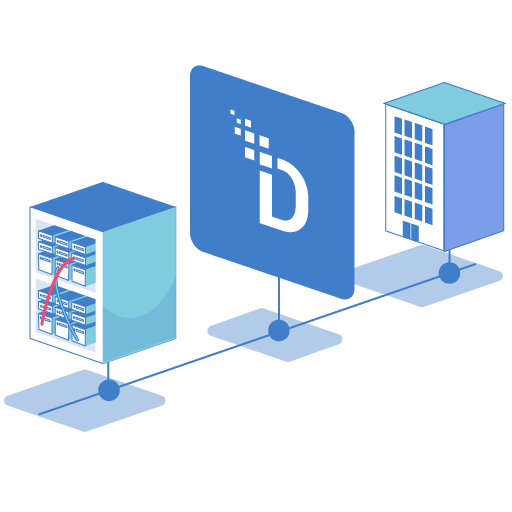
DataStealth is a Data Security Platform purpose-built to protect sensitive data across enterprise environments. Leveraging configurable policies, DataStealth identifies which data elements require protection and apply the appropriate data protection methodology - most commonly tokenization, encryption or masking - based on organizational risk tolerance and compliance requirements.
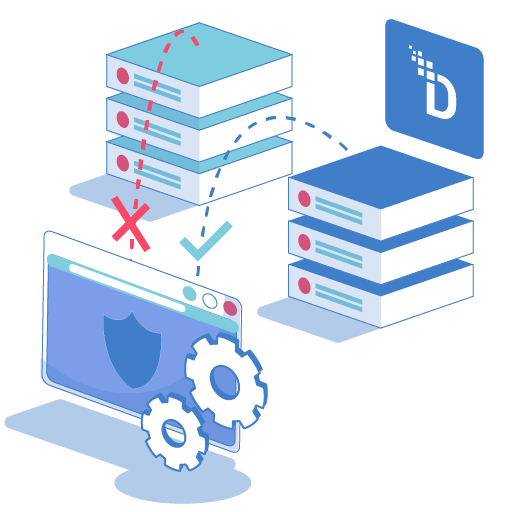
Organizations implementing DataStealth can choose between tokenization and encryption to safeguard their data. While both approaches aim to protect sensitive information, it is critical to understand the fundamental differences between them to make informed decisions during deployment.
See it in action →
DataStealth lets you apply the right defense - tokenization, masking, or encryption - on a per-data-element basis, tuned to your business needs.

Tokenized data will look and act like real data, so your applications do not need to be changed, and your workflows keep running smoothly.

Protection can be permanent, reversible, or time-bound; you decide.
Obfuscate datasets permanently for analytics, training, or sharing.

Your sensitive data is secured at rest and in transit from day one with no complex setup required.

Tokenized data that is exfiltrated is unusable, be it today or in the future.

Residency rules and third-party risk no longer keep you from using best-in-class SaaS tools.
DataStealth provides three core methodologies; Tokenization, Masking, and Encryption. Each is configurable at the data-element level through policy-driven rules. Combined with continuous monitoring, real-time classification, and broad technology integrations, DataStealth ensures sensitive data is always protected across structured and unstructured environments, on-premises and in the cloud.
Tokens look and act like real data, so your workflows keep running smoothly.
Deterministic tokens ensure joins, dedupes, and analytics all still work.
Make tokens permanent, reversible, or time-bound; you decide.
Mask sensitive fields on the fly; show “last 4 digits,” redact logs, or use realistic dummy data.
Obfuscate datasets permanently for analytics, training, or sharing.
Apply different masking rules by role, region, or device for true zero-trust enforcement.
Go beyond blanket encryption. Secure the fields that matter most for speed and compliance.
Encrypt data like credit cards while keeping formats intact to avoid breakage.
Enforce TLS 1.2+ and mTLS to secure every network hop.
Stop choosing between airtight security and smooth operations. Book a complimentary 1-on-1 session with a DataStealth architect and leave with:
DataStealth provides three core methodologies – i.e., Tokenization, Masking, and Encryption – each configurable at the data-element level through policy-driven rules.
Combined with continuous monitoring, real-time classification, and broad technology integrations, DataStealth ensures sensitive data is always protected across structured and unstructured environments, on-premises or in the cloud.
Deterministic: Same input → same token (supports joins, deduping, analytics).
Randomized: Same input → different tokens (maximizes privacy).
Reversible: Brokered, audited detokenization for workflows requiring real values.
Irreversible: One-way pseudonyms for permanent de-identification.
Format- and length-preserving tokens for compatibility with existing schemas.
Character-set controls for phone numbers, emails, IDs, addresses.
Checksum-aware tokens for PCI and similar fields.
Global tokens for enterprise-wide consistency.
Scoped tokens per app, tenant, or geography.
Time-bound and revocable tokens to limit long-term exposure.
Policy-driven reveal and break-glass detokenization.
Partial tokenization (e.g., “last-4”) for support use cases.
Multi-field deterministic correlation across related values.
Static masking for permanent obfuscation in datasets, exports, and sandboxes.
Dynamic masking for role-based, on-the-fly masking in applications.
Redaction for logs, tickets, and documents.
Partial reveal (e.g., “****1234”, j***@example.com).
Generalization/banding (e.g., “Age 30–39”).
Date shifting to preserve intervals without real dates.
Hashing/irreversible masking for joins and deduplication.
Realistic pseudonyms for training, QA, and demos.
Deterministic masking for stable joins and analytics.
Format- and length-preserving options for schema integrity.
Checksum-aware masking for PAN formats.
Role- and attribute-based masking across roles, tenants, and geographies.
Context-aware masking by device, source, risk score, or sensitivity.
Field- and row-level granularity, including nested JSON.
Works across structured and unstructured data sources.
Full-stack encryption: data at rest + in transit.
Field-level encryption for specific columns or JSON fields.
File/object encryption for documents, blobs, and data lakes.
Fragment-aware encryption for distributed storage architectures.
Symmetric AES-GCM (authenticated, low latency) and AES-CBC + HMAC.
Format-preserving encryption (FF1/FF3) for PANs and IDs.
Deterministic encryption for joins and lookups.
Envelope encryption: master keys protecting data keys.
TLS 1.2+ for all connections; mTLS and certificate pinning for zero-trust.