Wherever your workloads run, DataStealth ensures tokenization, masking, and encryption happen close to the data – with no impact on app performance and no code rewrites.
schedule A DEMO

Deploy in your own AWS, Azure, or GCP accounts and meet residency requirements across regions and jurisdictions.
Place DataStealth in the same VPC/VNet as your apps and data, keeping protection local and transparent.
Retain full ownership of your keys through AWS KMS, Azure Key Vault, GCP KMS, or on-prem HSMs – supporting BYOK and HYOK.
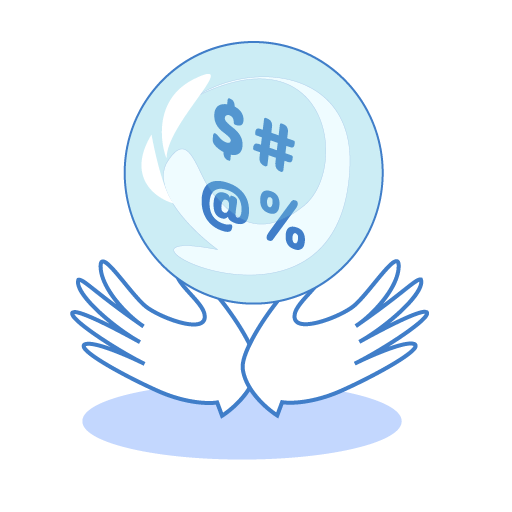
Dynamic masking tailors data visibility by role, so BI tools and dashboards empower decision-making without risking oversharing sensitive values.
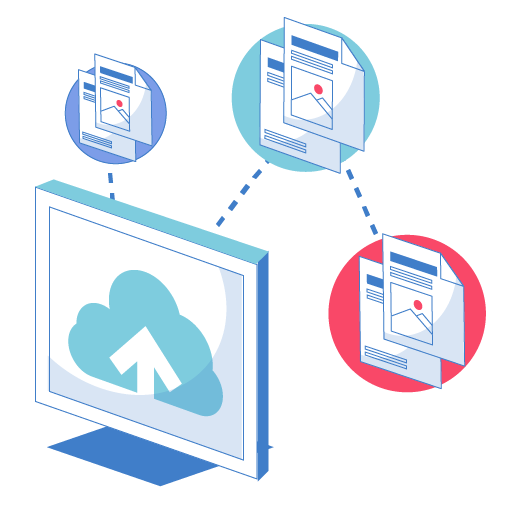
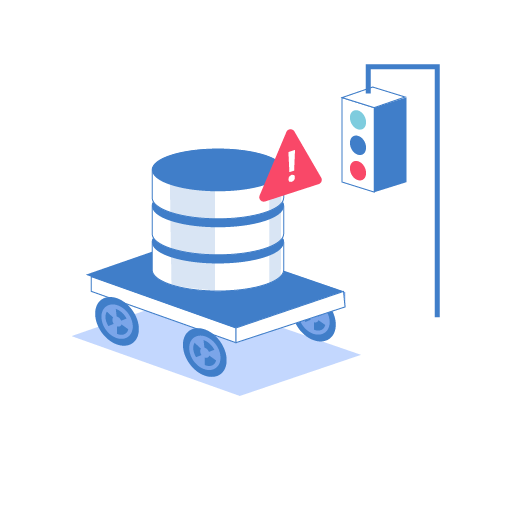
Sensitive data is neutralized at the first point of entry, so raw PII or PCI data never reaches your services – eliminating exposure from the start.
By encrypting or tokenizing fields before storage, managed databases (RDS, DynamoDB, Snowflake, etc.) only ever hold safe values – reducing compliance scope and breach liability.
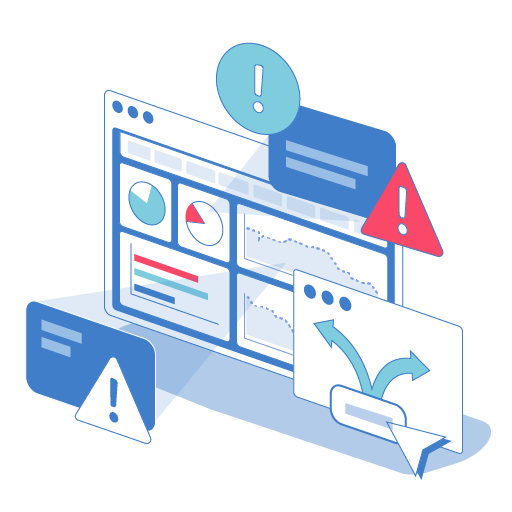
ETL and streaming jobs discover and protect sensitive data as it flows, ensuring warehouses and lakes remain compliant while still fueling analytics, AI, and reporting.

Deploy DataStealth in AWS, Azure, or GCP using VMs, containers, or Kubernetes – always inside your own accounts for full control and data residency.
Enforce policies locally across regions and clouds while managing governance centrally, ensuring consistent protection everywhere you operate.

Extend protection to API gateways, service meshes, and serverless workloads with lightweight workers that secure data without adding overhead.
Embed tokenization, masking, or encryption directly into applications, making it simple to secure sensitive fields on demand.

Multi-AZ clusters keep your protections always available, ensuring uptime and resilience across regions and accounts.

Stateless brokers and autoscaling workers adapt instantly to traffic spikes and new workloads without manual tuning.

Policies are treated as code – versioned, approval-gated, and rollback-ready – so enforcement stays safe and consistent across dev, test, and production.

Parallel fragment retrieval and cached policy decisions minimize latency, delivering enterprise-grade security without slowing your apps or driving up costs.
Apply masking or tokenization at gateways, proxies, or service meshes for HTTP, REST, gRPC, and GraphQL.
Protect fields across RDS, Aurora, Cloud SQL, Spanner, Cosmos DB, DynamoDB, BigQuery, Redshift, and Snowflake.

Secure S3, Azure Blob, GCS, and lakehouses with batch or streaming discovery, classification, and remediation.

Keep sensitive fields safe in transit and at rest by integrating with Kafka, Kinesis, Pub/Sub, and queue services inline or via workers.
Scrub secrets from logs, traces, tickets, and error payloads before they ever leave your applications, protecting you from leaks in your toolchain.
Extend protection to API gateways, service meshes, and lightweight workers alongside serverless functions and edge workloads.

In 30 minutes, we’ll show how it adapts to your cloud stack and give you a tailored roadmap for securing data across multi-cloud or hybrid environments.
Cloud data security is the discipline of protecting sensitive information stored and processed in cloud environments, including infrastructure-as-a-service (AWS, Azure, GCP), managed databases, object storage, SaaS applications, and serverless workloads.
The challenge is that cloud environments fragment data across regions, accounts, and services, making it difficult to maintain consistent data-centric protection.
DataStealth addresses this by deploying inside your own cloud accounts (in the same VPC or VNet as your applications) and applying tokenization, masking, and encryption at the data-element level before sensitive values reach databases, warehouses, or analytics pipelines.
This means your managed services (RDS, DynamoDB, BigQuery, Snowflake) only ever store protected values, reducing both breach impact and compliance scope.
For a comprehensive overview, see our Multi-Cloud Security Guide to Data-Centric Protection.
Cloud tokenization replaces sensitive data – e.g., credit card numbers, Social Security Numbers, health record identifiers – with format-preserving surrogate values (tokens) that retain the structure of the original but carry no exploitable meaning.
When tokenization happens before data enters a cloud database or warehouse, the downstream systems that store and process tokens are removed from regulatory audit scope.
Under PCI DSS, this means fewer systems subject to QSA assessment. Under HIPAA, tokenized ePHI no longer requires the same access controls as cleartext.
DataStealth's cloud deployment applies tokenization at the data layer (i.e., inline, before data reaches storage), so scope reduction is automatic and continuous rather than a periodic audit exercise.
For a comparison of scope reduction methods, read Tokenization vs Network Segmentation.
Data residency regulations require that certain data categories remain within specific geographic jurisdictions.
DataStealth enforces this by deploying regionally – i.e., within the AWS region, Azure region, or GCP region mandated by regulation – so data never crosses jurisdictional boundaries for processing.
Policies can be scoped per region, per tenant, or per data classification level, ensuring that a European customer's personal data is tokenized and stored within EU boundaries while a Canadian customer's data stays within Canada.
For organizations managing cross-border data transfers across multiple cloud providers simultaneously, DataStealth provides a single policy framework that enforces residency rules consistently regardless of the underlying provider.
Detailed cloud-specific guidance is available in the AWS Security Guide, Azure Security Guide, and GCP Security Guide.
Yes. Cloud infrastructure is only part of the modern data landscape — organizations also store sensitive data in SaaS applications such as Salesforce, ServiceNow, Workday, and HubSpot, as well as in file shares, including SharePoint, Google Drive, and S3-backed document stores.
DataStealth's platform provides unified discovery, classification, and protection across cloud infrastructure and SaaS, using the same policies, data classification engine, and data discovery capabilities regardless of where data lives.
For organizations that also maintain on-premise or hybrid environments, the same framework extends across deployment models.
Read SaaS Security: Protecting Sensitive Data for a deeper look.