Neutralize residency, compliance, and third-party breach risk by tokenizing sensitive data before it leaves your control.

Your enterprise needs best-in-class SaaS to stay competitive. But every new app introduces risk – forcing you to choose between innovation and compliance.

The best SaaS platforms live outside your jurisdiction. Using them means risking GDPR, PIPEDA, or HIPAA violations.

New tools multiply your "shadow data" estate – PII scattered across third-party clouds outside your control.

Each new app triggers lengthy reviews. Projects stall. Teams settle for outdated, second-rate tools.
DataStealth lets you adopt any SaaS app, anywhere, without exposing sensitive data. By tokenizing PII in-flight, SaaS becomes safe, compliant, and instantly deployable.
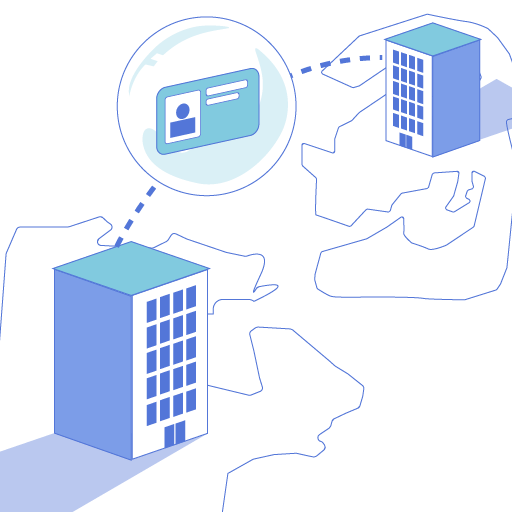
Tokenize PII before it crosses borders. Use any global SaaS tool while proving compliance to regulators and auditors.
SaaS vendors run their apps, you control the data. They process format-preserving tokens, not your customers’ real PII.


Apply one set of tokenization, encryption, and masking rules across your SaaS stack – no code changes, no agents.

Strict Canadian data residency laws blocked deployment of U.S.-hosted Salesforce Marketing Cloud.

DataStealth deployed in-line, requiring no changes to Salesforce. All Canadian PII was tokenized before reaching U.S. servers and safely de-tokenized for outbound emails.

The insurer launched Salesforce with full functionality and full compliance. Auditors confirmed no PII left Canada, turning a regulatory roadblock into a business enabler.

Deployed with a simple DNS or endpoint change. No code. No agents. Transparent to users and vendors.

Replace PII with format-preserving tokens in real time. SaaS apps function normally, but sensitive data never leaves your control.

Attribute-based access ensures only authorized users see real data. Offshore developers or vendors see only masked or tokenized values.

Get expert answers on deploying DataStealth at enterprise scale, without performance trade-offs or rewrites.
Schedule My SessionDataStealth deploys as an in-line gateway at the protocol layer – between your environment and the SaaS vendor. When data flows to or from the SaaS application, DataStealth intercepts the traffic and replaces PII, PHI, and PCI values with format-preserving tokens before they reach the vendor's servers.

The SaaS application processes tokens as if they were real data – joins, workflows, automations, and reporting all function normally. But no exploitable sensitive data ever resides in the vendor's environment.
Deployment requires a DNS or endpoint configuration change – no SDKs, no agents, no vendor-side integration. The same approach works for Salesforce, ServiceNow, Workday, HubSpot, and any HTTP/HTTPS-based SaaS platform. For a broader look at the architecture, read SaaS Security: Protecting Sensitive Data.
Shadow SaaS refers to SaaS applications adopted by business teams without formal IT or security approval – i.e., a marketing team signs up for a new email platform, a sales team imports customer lists into an unapproved CRM, or a product team uses a GenAI tool that ingests proprietary data.
Each unsanctioned tool becomes a new data repository outside your security perimeter. PII scatters across third-party clouds you don't control, can't audit, and may not even know about. The result is an expanding attack surface that traditional DLP tools can't see.
DataStealth addresses shadow SaaS by operating at the network layer – any outbound data flow to any SaaS endpoint passes through the gateway, where sensitive fields are discovered, classified, and tokenized regardless of whether the destination is sanctioned or not.
When a SaaS vendor suffers a breach, every customer whose real data sits in that vendor's environment is exposed. With DataStealth's in-line tokenization, the vendor's systems only contain tokens – valueless, format-preserving surrogates with no mathematical link to the original data.
If the vendor is breached, the attacker gets tokens – not real PII. There's nothing to decrypt, nothing to exploit, and nothing that triggers regulatory notification requirements under most frameworks.
This fundamentally changes the third-party risk equation. Instead of evaluating vendor security posture through questionnaires and hoping they're accurate, you remove the sensitive data from the equation entirely. The vendor's security posture becomes less critical because there's no exploitable data for an attacker to steal – even in a worst-case scenario. For organisations in financial services, healthcare, and insurance, this eliminates one of the largest categories of third-party risk.
Each regulation restricts how sensitive data can be processed by third parties – and SaaS vendors are third-party processors by definition.
GDPR requires Data Protection Impact Assessments for high-risk processing and adequate safeguards for cross-border transfers. PIPEDA holds the originating organisation accountable for data processed by third-party service providers. HIPAA requires Business Associate Agreements and limits PHI disclosure to the minimum necessary.
DataStealth satisfies all three by ensuring that no real personal data reaches the SaaS vendor.
Tokens that arrive at the vendor's servers are not "personal data" under GDPR, not "personal information" under PIPEDA, and not "PHI" under HIPAA – because they contain no information that identifies an individual. Compliance is enforced by architecture from a single platform, not by contractual promise.
For DSAR purposes, all real data remains within your jurisdiction and under your direct control.