
Discover how enterprise data encryption solutions protect sensitive information across mainframe, cloud, and hybrid environments. Compare strategies, tools, and best practices.
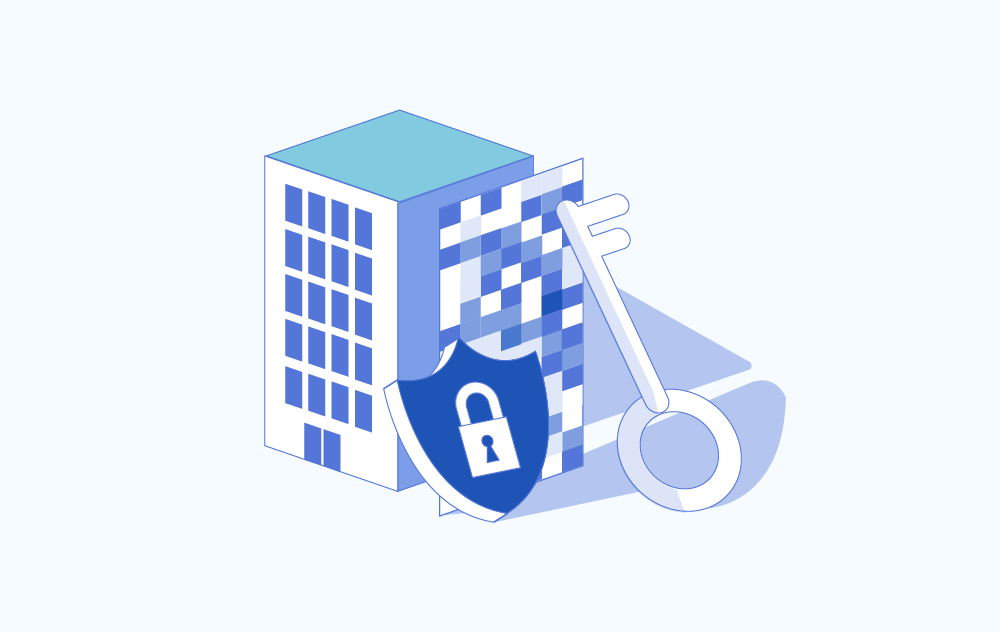
Enterprise data encryption has evolved from a discretionary security enhancement to an indispensable cornerstone of modern data protection.
The shift reflects a fundamental change in how organizations approach information security; rather than treating encryption as a final layer of defence, forward-thinking enterprises now recognize it as the foundation upon which all other security controls must be built.
This transformation has been driven by the proliferation of hybrid infrastructure, spanning decades-old mainframes to ephemeral cloud containers; regulatory frameworks maturing from vague guidelines to prescriptive mandates; and threat actors evolving from opportunistic attackers to sophisticated adversaries targeting sensitive data.
This guide examines enterprise encryption from foundational concepts through advanced implementation strategies.
Enterprise encryption differs fundamentally from consumer-grade solutions. While a consumer might encrypt a folder of personal documents, enterprise encryption must protect petabytes of data flowing through hundreds of applications, processed by thousands of users, and stored across dozens of systems spanning multiple technology generations.
Data at rest encompasses all information in persistent storage – i.e., databases, file systems, storage arrays, and backup media. Database encryption must balance protection against query performance and application compatibility.
Modern approaches include transparent database encryption (TDE) at the storage layer and column-level encryption for granular control. Archive and backup protection often receives insufficient attention despite being a significant vulnerability: backup systems usually contain complete copies of production data, sometimes retained for years.
Data in transit is vulnerable to interception, man-in-the-middle attacks, and eavesdropping. Network-layer encryption via TLS provides the foundation, but many legacy systems use proprietary protocols that resist standard approaches.
API security has emerged as critical – i.e., organizations must encrypt not just the transport layer, but specific fields within API payloads. Cloud transfer protection preserves encryption as data moves between on-premises systems and cloud services, including across infrastructure outside organizational control.
Data in use represents the most challenging frontier. Application-level encryption keeps information protected until it is displayed or processed.
Memory protection technologies like Intel SGX and AMD SEV create hardware-enforced enclaves enabling 'confidential computing' – processing sensitive data on infrastructure you don't fully control while maintaining cryptographic protection.
The Advanced Encryption Standard (AES) with 256-bit keys remains the gold standard, providing 2256 possible key combinations while modern CPUs include hardware acceleration for AES operations, enabling encryption at near-wire speeds.
Format-preserving encryption (FPE) deserves particular attention for legacy environments.
FPE algorithms encrypt data while maintaining the original format – e.g., a 16-digit payment card number remains 16 digits after encryption. This eliminates the need for application modifications that would otherwise be required to accommodate changed data structures.
If encryption algorithms represent the locks protecting your data, encryption keys are the physical keys that open those locks. Organizations that implement strong encryption with weak key management have created a false sense of security.
Key generation must use cryptographically secure random number generators. Hardware security modules (HSMs) provide the highest assurance, using physical random number generators and tamper-resistant hardware.
Key storage requires protection commensurate with the protected data; a compromised key enables decryption of every protected record.
Many organizations adopt Bring Your Own Key (BYOK) or Hold Your Own Key (HYOK) models for cloud deployments, maintaining direct control over master keys.
Key rotation – periodic replacement of encryption keys – limits compromise impact and ensures regulatory compliance. Effective rotation must be automated and seamless, re-encrypting data without service disruption. This complexity represents a primary argument for unified key management platforms that orchestrate rotation across the entire environment.
Enterprise encryption must integrate with the full spectrum of infrastructure – i.e., databases, application frameworks, cloud platforms, and legacy mainframe environments.
Database integration remains critical, requiring support for Oracle, SQL Server, PostgreSQL, and NoSQL platforms while handling complex data types including JSON and XML.
Mainframe security integration addresses critical business processes running on decades-old systems containing the most sensitive enterprise data.
No-code deployment options have become essential, allowing security teams to implement encryption through configuration rather than coding, accelerating deployment and reducing reliance on scarce development resources.
Effective encryption strategies begin with a comprehensive understanding of what requires protection. Data classification establishes the foundation. Without it, organizations face a binary choice between encrypting everything (often impractical) or making ad-hoc decisions that inevitably leave critical data unprotected.
The classification process should inventory sensitive data across all systems, identifying not just where data resides but how it flows through the organization.
This often reveals surprises: sensitive data in unexpected locations, shadow IT systems containing customer information, legacy applications processing data under compliance requirements that postdate their development.
In-line, network-layer solutions offer an optimal balance for most enterprises, providing comprehensive protection without application modifications.
This approach positions encryption transparently in the data path, proving particularly valuable for organizations with extensive legacy infrastructure or limited development resources.
Enterprise encryption implementations succeed or fail based on rollout strategy.
Organizations attempting a comprehensive, simultaneous deployment routinely encounter compounding issues. A phased approach enables learning from each stage and building organizational confidence.
Successful enterprise encryption deployments follow a structured approach:
Performance optimization minimizes encryption overhead by leveraging hardware acceleration (AES-NI instructions), selectively encrypting sensitive fields only, intelligent caching strategies, and load distribution across multiple nodes.
Modern solutions typically achieve less than 5% performance impact when properly configured.
Encryption must work with existing access controls:
This integration ensures encrypted data remains accessible to authorized users while preventing unauthorized access.
Modern encryption solutions automate compliance by leveraging policy templates aligned with regulatory requirements, automated reporting, and comprehensive audit trails, thereby reducing costs and improving consistency compared to manual processes.
FPE has emerged as critical for complex legacy environments. Unlike traditional encryption that changes data format, FPE maintains exact structure – a credit card number remains 16 digits, a Social Security number remains nine digits.
This eliminates the most significant barrier to encryption adoption in legacy environments: application modification requirements.
Applications validating input formats, databases with fixed-length fields, and reports designed around specific structures all continue functioning normally.
FPE algorithms (FF1 and FF3, NIST-standardized) provide enterprise-grade security while enabling encrypted searches in some cases. Organizations report significantly faster deployment compared to traditional approaches.
Tokenization replaces sensitive data with non-sensitive substitutes – i.e., tokens – that have no mathematical relationship to the original. The mapping exists only in a secure vault.
Tokenized data has no intrinsic value; even if attackers obtain tokens, they cannot derive original values without vault access.
This makes tokenization particularly valuable for PCI-DSS compliance, potentially removing systems from scope entirely. Many organizations deploy both techniques: tokenization for data that systems handle but never need to decrypt (e.g., payment card numbers), and encryption for data that authorized systems must eventually decrypt (e.g., customer records for support).
Quantum-resistant cryptography addresses the most significant long-term threat. While practical quantum attacks remain years away, the 'harvest now, decrypt later' threat means adversaries may already be collecting encrypted data. NIST has standardized post-quantum algorithms, and forward-looking organizations are beginning migration planning.
AI-enhanced encryption transforms management through machine learning, detecting anomalous access patterns, adaptive security adjusting policies based on assessed risk, and AI-driven optimization tuning configuration for specific workloads.
Cloud-native encryption provides serverless function-level protection, Kubernetes-native container security, and multi-cloud key management, unifying control across AWS, Azure, Google Cloud, and other providers.
The principles outlined in this guide – i.e., comprehensive protection across data states, seamless integration with existing infrastructure, no-code deployment, and unified key management – form the foundation of the DataStealth Data Security Platform.
Built specifically for organizations that need enterprise-grade protection without the complexity that traditionally accompanies it, DataStealth approaches data encryption differently than legacy solutions.
Rather than deploying separate tools for discovery, classification, encryption, tokenization, and masking, DataStealth consolidates these capabilities into a single platform.
This unified approach breaks down the silos that typically exist between IT, security, compliance, and business teams, enabling a single data security operating model in which all stakeholders share the same visibility and apply consistent protection policies.
The platform discovers and classifies sensitive data across on-premises databases, cloud environments, SaaS applications, and legacy systems without requiring agents, API integrations, or code modifications.
Once data is classified, protection policies can be applied automatically – i.e., tokenizing payment card data, masking personal identifiers in non-production environments, or encrypting sensitive fields in databases – all from a single management interface.
DataStealth operates at the network layer, applying tokenization, encryption, and masking transparently as data flows between applications, databases, and users.
This in-line approach means existing applications continue functioning without modification; format-preserving techniques ensure that protected data maintains the structure applications expect, so validations, workflows, and integrations remain intact.
Deployment begins with a DNS change rather than months of integration work. Security teams can optionally initiate discovery scans via API integrations, on demand for immediate needs, or on a schedule during off-hours.
This operational simplicity translates directly into faster time-to-protection and a lower total cost of ownership than solutions that require extensive development resources.
DataStealth supports the full spectrum of data protection techniques discussed in this guide, applied on a field-by-field basis through configurable policies.
Tokenization options include deterministic tokens to maintain referential integrity across systems, randomized tokens for stronger privacy, reversible tokens for workflows that require recovery of the original value, and irreversible tokens for permanent de-identification.
Encryption capabilities span AES-GCM for authenticated encryption with tamper detection, format-preserving encryption (FF1/FF3) for legacy compatibility, and field-level encryption for granular protection within records.
In non-production environments, dynamic masking applies role-based obfuscation at read time, while static masking permanently transforms data to ensure safe use in development, testing, and analytics.
The platform supports partial reveals (showing only last four digits), date shifting for timeline analytics, and realistic pseudonymous substitution for QA environments requiring production-like data characteristics.
DataStealth integrates with existing key management infrastructure rather than requiring organizations to adopt proprietary systems.
The platform supports external KMS and HSM integration with AWS KMS, Azure Key Vault, Google Cloud KMS, and hardware security modules. BYOK and HYOK models enable customer-managed key rotation and revocation. Per-tenant and per-dataset key isolation contains blast radius and supports data residency requirements.
Automatic rotation with policy-driven lifecycles ensures keys are refreshed without operational disruption, while dual control and comprehensive audit trails maintain separation of duties and compliance documentation.
Whether your infrastructure spans on-premises data centers, public cloud, or hybrid environments, DataStealth adapts to your architecture.
On-premises deployments run inside your data center – be it on bare metal, VMs, containers, or Kubernetes – ensuring sensitive data never leaves your trust boundary.
Cloud deployments place components in your own AWS, Azure, or GCP accounts, in the same VPC and region as your applications for low latency and data residency compliance.
Hybrid configurations bridge legacy systems and modern cloud architectures with centralized governance and consistent policy enforcement across both.
The platform supports the full range of enterprise protocols and data stores: HTTP/HTTPS, databases (SQL Server, Oracle, PostgreSQL, DB2, MongoDB, DynamoDB), file shares (SMB, S3, SharePoint), messaging systems (Kafka), and structured formats (JSON, XML, CSV).
This broad compatibility means DataStealth can protect data wherever it resides in your environment.
DataStealth operates as a PCI Level 1 Service Provider and serves as a Participating Principal Organization with the PCI Security Standards Council and a member of the PCI SSC Board of Advisors.
This involvement means DataStealth doesn't just comply with standards – it helps shape them. For organizations seeking PCI scope reduction, DataStealth's tokenization capabilities can reduce audit scope by up to 90% by ensuring cardholder data never enters systems in cleartext.
Every enterprise environment is unique – different legacy systems, different cloud strategies, different compliance requirements, different data flows.
The most effective way to evaluate whether DataStealth addresses your specific challenges is to see it operating against your actual infrastructure and data patterns.
DataStealth offers personalized demonstrations that go beyond generic product walkthroughs.
Our team works with you to understand your environment, identify your highest-priority data protection challenges, and demonstrate how the platform would discover, classify, and protect your sensitive data, with realistic deployment timelines and measurable outcomes you can expect.
Schedule a demo to see DataStealth in action. You'll gain concrete visibility into your data security posture and a clear understanding of how comprehensive protection can be achieved without disrupting your operations.
Enterprise data encryption has become fundamental to modern data protection strategies. Success requires careful planning, appropriate technology selection, and systematic implementation.
Organizations must balance security requirements with operational needs while maintaining performance and usability. Modern solutions like DataStealth offer in-line, network-layer encryption that deploys without code changes, scales horizontally, and supports everything from mainframe encryption to cloud workloads.
The key to successful enterprise encryption lies in choosing solutions that integrate seamlessly with existing infrastructure while providing the flexibility to adapt to future requirements. With proper implementation, organizations can achieve comprehensive data protection without disrupting operations or impeding innovation.

Bilal is the Content Strategist at DataStealth. He's a recognized defence and security analyst who's researching the growing importance of cybersecurity and data protection in enterprise-sized organizations.